
By Josh Ricker.
Choosing among the best home builders in dale hollow lake area means comparing more than exterior style. You need to understand the lot, construction method, delivery timeline, utilities, ownership responsibilities, and how the finished home will fit your plans.
Explore modern turnkey home floor plans
The Preserve at Dale Hollow offers a distinct point of comparison: architect-designed modern elevated homes on private wooded lots within a 520-acre Tennessee community. The community is about 9 minutes from Dale Hollow Lake.
The best home builders in dale hollow lake area make scope, quality, timing, lot conditions, and ownership responsibilities clear. The Preserve offers a coordinated option with prefabricated steel-frame construction, architect-designed homes, private wooded lots, and a stated three-month build timeline. Buyers should verify current inclusions and schedules before committing.
A useful comparison does not assume that one delivery model fits every buyer. Building on land you already own can provide broad control, while a planned community can reduce coordination. A turnkey path may be a strong fit when you want a defined home model, lot process, and community setting without managing every contractor yourself.
How to Compare the Best Home Builders in Dale Hollow Lake Area
Start with evidence that applies to the kind of home you want to own. A builder who is excellent at conventional houses may not offer the same experience with a wooded lake-area lot. The same is true for an elevated foundation system, prefabricated components, or a home intended for personal use and occasional rental. Your comparison should test the complete process, from the first scope conversation through completion and ongoing support.
A practical builder-comparison checklist
- Confirm relevant experience. Ask whether the team has completed projects in a wooded or sloped setting and how it handles access, grading, drainage, utilities, site preparation, and weather-related delays.
- Request a written scope. The scope should separate the home, site work, foundation system, utility connections, appliances, furnishings, finishes, permits, landscaping, cleanup, and any owner-selected upgrades. A written exclusions list is just as important.
- Ask how quality is checked. Discuss insulation, air sealing, heating and cooling, moisture control, ventilation, and the inspections or performance checks used before handoff. The University of Minnesota Extension explains performance testing for new homes.
- Evaluate the lot, not just the rendering. Ask how the home will be positioned, what views and privacy the lot provides, how drainage is addressed, and which natural features are expected to remain.
- Understand post-completion support. Get warranty terms, service contacts, response expectations, maintenance responsibilities, and a clear explanation of what happens if a problem appears after closing.
- Review the transaction carefully. Ask about deposits, financing, inspections, title, closing, change orders, cancellation terms, and the documents governing the community. HUD’s home-buying guide is a useful general reference, but property-specific documents should control your decision.
The strongest builder is not necessarily the one with the most impressive photos or the shortest advertised timeline. It is the provider that makes responsibilities visible, answers difficult questions directly, and gives you enough information to compare the proposal with another path.
What Should You Compare Before Choosing a Lake-Area Home Builder?
Compare delivery models before comparing finishes. The difference between building on your own land, buying in a traditional community, and selecting a home through a turnkey development affects your decision-making workload. It also changes the questions you need to ask.
| Pathway | What you typically control | What to clarify | Best fit |
|---|---|---|---|
| Custom on your land | Lot, architecture, materials, finishes, and many construction decisions. | Site work, utilities, permits, allowances, contractor coordination, and the complete schedule. | Buyers who already own suitable land and want extensive design control. |
| Traditional community | Available plans, lot selection, finishes, and community options. | Purchase inclusions, association documents, maintenance, utilities, and occupancy or rental rules. | Buyers who value an established setting and defined shared expectations. |
| Turnkey developer | Model selection, available lot or placement, and approved options. | Construction scope, delivery schedule, furnishings, utilities, maintenance, and optional rental arrangements. | Buyers seeking a coordinated path from selection to ready-to-use ownership. |
Custom construction can provide the broadest creative freedom, but the buyer may need to assemble land, design, financing, contractors, approvals, and services. That does not make it the wrong choice. It means the full project budget and schedule need to include more moving parts than the house itself.
A turnkey path can simplify coordination, but it still requires due diligence. Review the contract, lot terms, community rules, utility arrangements, finish selections, fees, and the exact meaning of ready for use. Do not treat a projected rental figure as guaranteed income. Evaluate personal use, operating costs, insurance, local requirements, management, and demand separately.
At The Preserve at Dale Hollow, buyers can review three modern home models, select from available lots, and discuss how the home will fit within the community. The documented approach uses prefabricated steel frames and an elevated steel-pier foundation system. Buyers should confirm current availability, specifications, and delivery expectations for a particular lot and model.
What Makes the Best Home Builders in Dale Hollow Lake Area Different?
For buyers comparing the best home builders in the Dale Hollow Lake area, The Preserve is not simply another custom-builder listing. It is a planned community and home-delivery option built around modern design, a nature-focused setting, and a more coordinated ownership path. That distinction matters if you want a second home or vacation property without starting with an undeveloped parcel.
Modern architecture designed for a wooded setting
The Preserve’s homes are architect-designed and elevated on steel piers. The construction is not a literal home built into a living tree. Instead, the elevated design uses the terrain to create a treetop feel, bring in views, and connect indoor living areas with private outdoor spaces. Floor-to-ceiling windows, contemporary finishes, and rooftop decks support an experience that feels modern rather than rustic.
The construction method gives buyers a clear starting point for questions about delivery. The Preserve states that prefabricated steel-frame homes follow an approximately three-month build timeline. That is a stated target, not a promise that overrides lot conditions, approvals, selections, weather, or current project availability. Ask how the schedule applies to the home you are considering and which milestones will be documented.
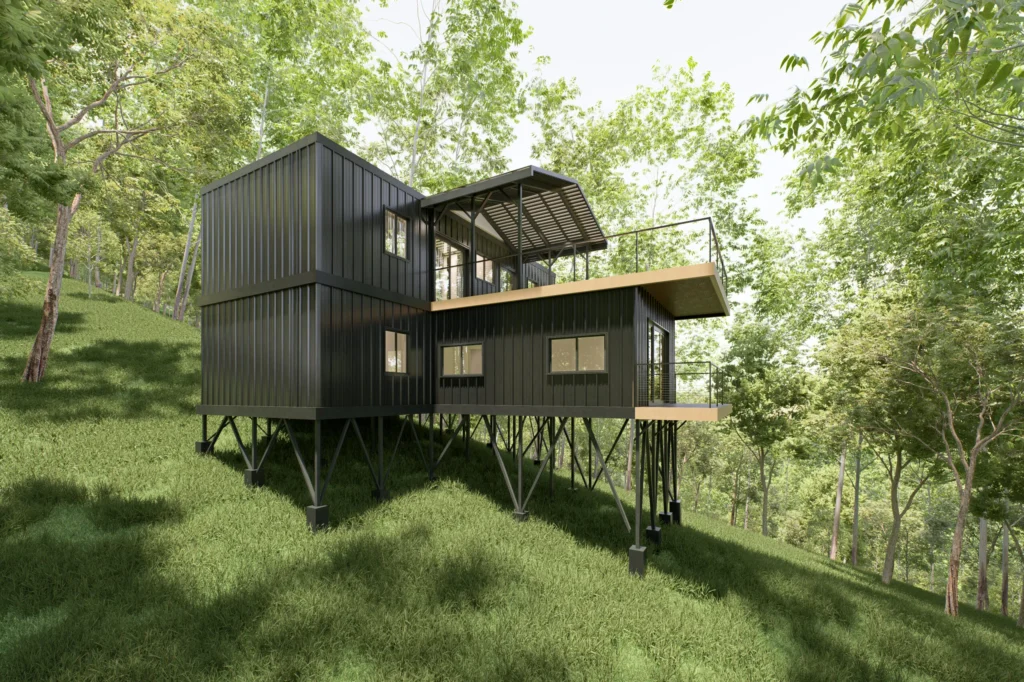
Private wooded lots and flexible ownership use
The setting is another differentiator. The Preserve spans 520 wooded acres in Celina, Tennessee, giving buyers a community context rather than an isolated homesite. Private wooded lots can provide separation and a stronger connection to nature, but every lot has its own slope, outlook, access, and surrounding conditions. Tour the specific location and ask how the home will be oriented before making assumptions from a general site image.
The homes are designed for more than one use. An owner may want a peaceful weekend retreat, a place for extended stays, a remote-work base, or a property that can be considered for short-term rental use. Fiber-optic internet availability supports practical connectivity, while the home’s layout and rooftop deck support time outdoors. Rental use remains a business decision, so review policies, expenses, management, insurance, and realistic occupancy before relying on projected income.
How Do Location, Lots, and Connectivity Affect Your Decision?
A well-designed home can still be a poor fit if its setting does not match your routines. When you compare builders near Dale Hollow Lake, evaluate the home, lot, access, utilities, and ownership use as one decision.
Visit the lot and study the setting
The Preserve is approximately 9 minutes from Dale Hollow Lake boat ramps. That proximity can make boating, fishing, and other lake activities practical while keeping the home in a wooded community setting away from the immediate shoreline. Confirm the route and drive time for the particular lot, then consider how often you expect to make that trip.
During a visit, look at slope, drainage, tree cover, arrival access, parking, outdoor orientation, and the location of neighboring homes. Ask what natural features are expected to remain. Consider morning and afternoon light, the view from the main living area, deck privacy, storage, and how the property may feel in different seasons. These questions are useful whether you choose a turnkey home or a custom build.
Make connectivity part of the construction conversation
Internet should be discussed before closing, not after moving in. Remote workers and owners who plan longer stays need to know whether service is available at the selected lot. Ask who coordinates installation, what equipment is needed, and what ongoing charges apply. The Preserve identifies fiber-optic internet availability, but buyers should confirm the current service details for their specific home.
Also ask about electric service, water, wastewater or septic, trash, emergency access, road maintenance, and winterization. These details may not appear in a floor-plan brochure, yet they affect the practical experience of owning a home in a wooded lake-area community.
Which Questions Should You Ask Before You Commit?
Bring a written question list to your first call and property tour. Ask for answers in writing when the response affects price, timing, ownership rights, or future operating costs.
- What exactly is included? Separate the home price from the lot, site preparation, foundation system, utilities, appliances, furnishings, finish selections, permits, landscaping, and cleanup. Review the cost comparison for a custom versus turnkey Dale Hollow home as a starting point, then request current property-specific figures.
- What can change the timeline? Ask when the agreement takes effect, which approvals are required, when site work begins, and how changes, weather, material availability, and lot conditions affect delivery.
- How does lot selection affect the home? Ask about orientation, privacy, slope, drainage, access, setbacks, views, and the location of future or neighboring homes. Confirm which shared areas and land rights apply.
- Which utilities and services are provided? Get written confirmation about electric, water, wastewater or septic, fiber internet, roads, trash, emergency access, and any recurring association or maintenance fees.
- What will ownership require after closing? Review roof, deck, exterior, HVAC, pier-system, pest-prevention, winterization, cleaning, and warranty responsibilities. Ask who handles service calls when you are away.
- Can the home be used for short-term rentals? Clarify community rules, local requirements, insurance, management, owner-blocked dates, cleaning, guest support, and operating costs. Treat income as a possibility, not a guarantee.
- What documents should I review? Request the purchase agreement, lot documents, association rules, fee schedule, warranty terms, disclosures, and closing information. Have your attorney, lender, or other qualified adviser review documents when appropriate.
What Does a Turnkey Dale Hollow Home-Buying Path Look Like?
A coordinated process should make the next decision clear at every stage. At The Preserve at Dale Hollow, a buyer can begin by reviewing the available models, then match a preferred layout with a lot and a practical ownership plan.
1. Start with the model
Review the available one-, two-, and three-bedroom designs. Think about who will use the home, how much sleeping and gathering space you need, whether remote work requires a dedicated area, and how the outdoor spaces support your routine.
2. Match the model to the lot
Ask how the home will sit on the selected wooded lot and what views, privacy, access, and drainage conditions come with that placement. The community lot information can help frame questions about a planned setting, but confirm current inventory and terms directly.
3. Review scope, schedule, and ownership documents
Before committing, compare the written inclusions and exclusions, expected milestones, utility arrangements, recurring costs, warranty support, and any rental-management terms. This is the point to identify unanswered questions, not after construction begins.
4. Tour and decide how you will use the home
A tour lets you test the design and setting in person. Walk the available lots, consider arrival and storage, look at the relationship between indoor rooms and outdoor areas, and imagine an ordinary week as well as a vacation weekend. If rental use is part of the plan, model conservative expenses and personal-use needs before treating it as an investment decision.
Request information and schedule a Dale Hollow home tour
Frequently Asked Questions
What should I look for when comparing home builders near Dale Hollow Lake?
Compare the delivery model, written scope, construction method, lot options, timeline, utilities, warranty, and post-completion support. Ask how quality is checked and which responsibilities remain with you. The Preserve at Dale Hollow offers a modern turnkey path with architect-designed homes, private wooded lots, and an approximately three-month stated build timeline. Confirm current details for the specific home and lot.
Is a turnkey home different from building on my own lake-area lot?
Yes. Building on your own lot generally requires coordinating land, design, permits, utilities, site work, and contractors. A turnkey option can bring more of those decisions into one planned community and home-selection process. You still need to review contracts, lot terms, fees, specifications, and ownership responsibilities before proceeding.
How close should a vacation home be to Dale Hollow Lake activities?
Choose proximity based on how often you expect to use boat ramps, fishing areas, trails, and other recreation. The Preserve reports that its homes are about 9 minutes from Dale Hollow Lake boat ramps. Confirm the actual route and current drive time for the property you are considering.
Can a Dale Hollow vacation home support both personal use and rental plans?
It can, but the answer depends on community policies, local requirements, insurance, management, expenses, and realistic occupancy. The Preserve designs its homes for dual use, allowing buyers to consider personal enjoyment alongside possible short-term rental use. Evaluate the home for your own needs first, and treat rental income as a possibility rather than a guarantee.
Ready to Explore Your Dale Hollow Home Options?
Choosing among the best home builders in dale hollow lake area is easier when the design, setting, and ownership path align with your plans. The Preserve at Dale Hollow offers a modern, elevated option for buyers who want to learn more before making a decision.