
If you are buying a Dale Hollow Lake vacation home, what buyers should evaluate first is not just the view. The right purchase needs to fit the way you will use it, the land and community around it, the practical details of ownership, and the level of due diligence you are prepared to complete. The Preserve at Dale Hollow gives buyers a distinct local option: architect-designed elevated homes on private wooded lots across a 520-acre community, about 9 minutes from Dale Hollow Lake.
Explore The Preserve at Dale Hollow home models and compare layouts for your ownership goals.
A thoughtful evaluation does not require deciding between lifestyle and practicality. It means testing both. Use the questions below to compare any Dale Hollow Lake vacation-home opportunity, then see whether The Preserve’s modern design, treetop setting, and lake access align with your plans.
What should buyers evaluate before purchasing a Dale Hollow Lake vacation home?
Before making an offer or choosing a homesite, evaluate seven areas: total ownership scope, lot and location, floor plan, construction and utilities, personal use, rental assumptions, and community rules. A property can look compelling in photographs and still be a poor fit if the lot, operating plan, financing structure, or maintenance expectations do not match how you intend to own it.
- Total ownership scope: Clarify what the purchase includes and which costs remain separate.
- Lot and setting: Compare privacy, views, access, drainage, and the relationship to the lake.
- Home fit: Match bedrooms, bathrooms, storage, outdoor space, and connectivity to your use.
- Construction details: Confirm specifications, schedule, inspections, utilities, and warranty coverage.
- Personal use: Decide how often you will visit and what a comfortable owner stay requires.
- Rental plan: Test demand, rules, management, taxes, insurance, and realistic operating costs.
- Community fit: Understand association rules, roads, future phases, and the ownership experience.
This order matters. Buyers who start with a floor plan often discover later that the lot, rental rules, or ongoing costs change the decision. Start with the ownership model, then test the physical property against it.
1. What does the purchase include beyond the home itself?
The purchase price is only one part of a vacation-home decision. Ask for a written explanation of what is included in the home, homesite, standard finishes, appliances, outdoor spaces, utility connections, and any community infrastructure. Then identify items that may vary by model, finish level, lot placement, phase, or buyer-selected upgrade.
For a community such as The Preserve at Dale Hollow, a buyer should specifically ask:
- Is the homesite included, and can a lot premium apply to a preferred view or placement?
- Which appliances, fixtures, flooring, counters, decks, and heating or cooling features are standard?
- Which finish choices or upgrades are optional?
- What closing costs, lender fees, inspection costs, and insurance requirements should be expected?
- What recurring association, utility, waste, internet, maintenance, and management costs should be included in the annual budget?
Do not rely on a general brochure when comparing opportunities. Ask for the current specifications and an itemized estimate for the exact model and homesite under consideration. That document gives you a better basis for comparing the cost of a modern elevated home with the cost of purchasing land and managing a custom build.
For additional context, read the comparison of custom versus turnkey construction on Dale Hollow Lake before deciding which ownership path best fits your timeline and involvement level.
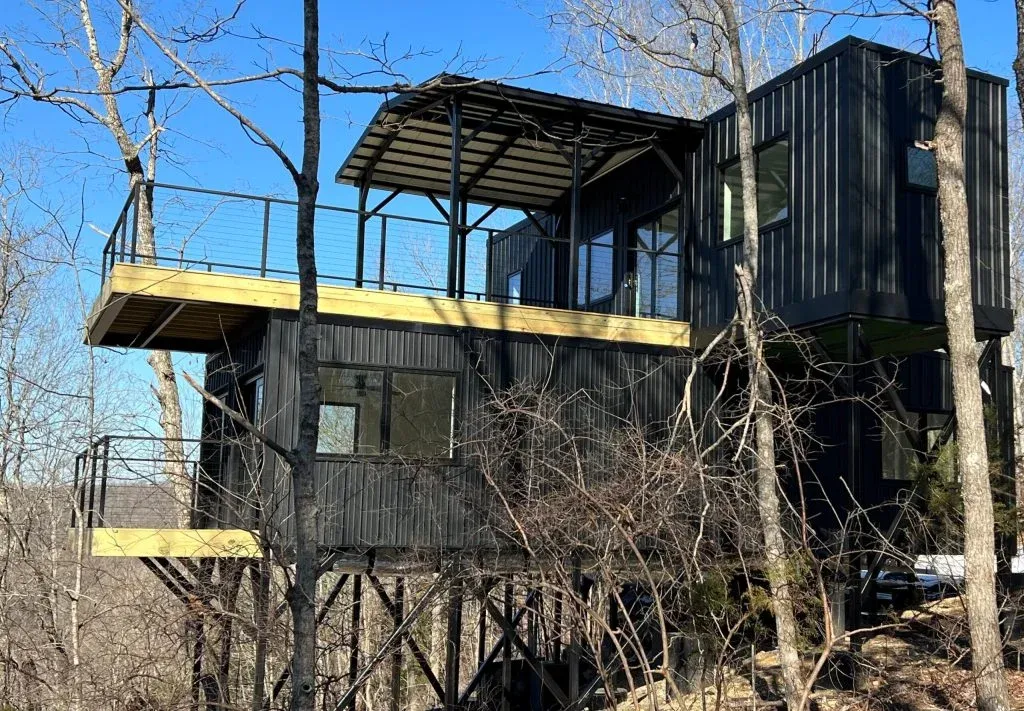
2. How should you evaluate the lot and the home’s relationship to Dale Hollow Lake?
Lake proximity and lakefront ownership are not the same thing. Before buying, determine whether a property sits directly on the water, has a lake view, or offers convenient access from a nearby wooded community. Each option creates a different ownership experience, maintenance profile, insurance question, and recreation routine.
The Preserve at Dale Hollow is positioned about a 9-minute drive from Dale Hollow Lake rather than presenting every home as direct waterfront property. That distinction can be valuable for buyers who want a wooded, private setting with practical access to boating, fishing, and other lake activities. It also means the buyer should evaluate the drive, nearby launch points, storage plan, and daily convenience instead of assuming a lake address tells the whole story.
When reviewing a lot or homesite, ask:
- How does the topography affect the view, driveway, drainage, and outdoor living areas?
- How much privacy is created by the wooded setting and spacing between homes?
- How will the property feel in different seasons, especially when foliage changes?
- How long does it take to reach the lake, boat ramps, marinas, groceries, and other regular destinations?
- What access, parking, storage, or community rules affect boats, trailers, and outdoor equipment?
Use the Dale Hollow Lake surroundings guide to understand the broader recreation setting, then verify the exact route and drive time for the homesite you are considering.
3. Which floor plan best matches your ownership goals?
A vacation home should work for the people who will use it most often, not only for the largest group you might host once a year. Consider sleeping capacity, bathroom access, storage, outdoor living, work connectivity, and the amount of space you can comfortably maintain. A smaller, efficient plan can be a better fit for frequent couple getaways, while a larger plan may make sense for family stays or a rental strategy that depends on multiple bedrooms.
The Preserve offers architect-designed 1-bedroom, 2-bedroom, and 3-bedroom models. The homes are designed with elevated living areas, private rooftop decks, modern finishes, and fiber-optic internet availability. Compare each model against your actual use:
| Buyer priority | Questions to ask | What to compare |
|---|---|---|
| Personal retreat | Will the home feel comfortable for two people on a long weekend? | Bedroom layout, kitchen, storage, deck, and privacy |
| Family use | Can guests sleep, gather, and use the bathrooms without crowding? | Bedroom count, bathroom count, living space, and outdoor areas |
| Remote work | Can the home support reliable work and personal downtime? | Fiber availability, workspace, heating, cooling, and acoustics |
| Rental use | Does the layout offer a clear reason for guests to choose it? | Guest capacity, views, outdoor living, finishes, and operating costs |
Review the current Dale Hollow vacation-home models with a buyer’s eye. Ask how furniture, owner storage, linens, maintenance supplies, and guest turnover will work in the finished plan. A floor plan that looks efficient on paper should also support your day-to-day routine.
4. What construction and utility details need independent verification?
New construction can reduce the uncertainty of buying an older property, but it does not remove the need for verification. Ask for the current construction specifications, expected completion milestones, inspection opportunities, warranty terms, and the names of the responsible parties. Buyers should understand what is being built, when decisions become final, and how changes are documented.
For an elevated vacation home, ask about the details that affect comfort and long-term care:
- Foundation and support system, including how the home is anchored and accessed.
- Insulation, windows, heating, cooling, and moisture control.
- Water source, septic or sewer arrangements, electric service, and internet availability.
- Driveway, parking, stairs, decks, rooftop areas, and exterior drainage.
- Builder warranty, punch-list process, service contacts, and post-completion support.
Have an independent inspector or qualified professional review the property at the appropriate stages. The goal is not to distrust the builder. It is to give the buyer a clear record of the condition, specifications, and responsibilities attached to the purchase.
5. How much personal use will make the purchase worthwhile?
A second home works best when the owner has a realistic plan for using it. Estimate the number of weekends, longer stays, holidays, and work trips you can actually make. Then consider how far you are willing to drive, who will use the home with you, and which features make the trip worthwhile even when you are not boating or fishing.
The Preserve’s location in Celina, Clay County, places owners within reach of Dale Hollow Lake recreation while offering a wooded setting away from the busiest waterfront activity. Buyers should test the route from their primary home, the convenience of arriving after dark, and the nearby services they will use during a normal stay. A beautiful property is more useful when the trip remains manageable.
Write down three owner-use scenarios before choosing a model:
- A typical two-night weekend for the primary owners.
- A holiday or family visit with the largest expected group.
- A week when weather changes plans and everyone spends more time indoors.
If the home still feels functional across all three scenarios, the floor plan is probably being evaluated on more than its listing photography.
6. What should buyers verify before relying on rental income?
Short-term rental potential can be part of a vacation-home plan, but it should be treated as a scenario to test, not a guaranteed return. Before using projected income in your decision, ask how the property may be operated, who will manage it, which owner-use limits apply, and which expenses reduce gross booking revenue.
A practical rental review should include:
- Community, association, county, and local rules that may affect short-term rentals.
- Insurance for a property used by paying guests, plus liability and property coverage.
- Management, cleaning, maintenance, utilities, supplies, taxes, platform fees, and reserves.
- Seasonality around boating, fishing, holidays, and weather.
- Owner blocks, cancellation exposure, furnishing needs, and response expectations.
- A conservative occupancy and expense scenario that does not depend on best-case months.
Ask for current documentation and have your lender, tax professional, and insurance provider review the assumptions that apply to your situation. The article Is Dale Hollow Lake a good place to buy property? offers broader context on lifestyle and investment considerations, but no article or seller projection can replace property-specific analysis.
7. Which community rules and future plans matter to buyers?
Community living can make a vacation home easier to maintain, but it also means ownership is shaped by shared rules and infrastructure. Read the current association documents before committing. Look for policies on rentals, guests, exterior changes, parking, pets, quiet hours, landscaping, decks, storage, and construction activity.
For a large wooded community, also ask about:
- Road maintenance, snow or storm response, trash service, and common-area care.
- How utilities and internet service are maintained.
- Planned phases, future homesites, construction schedules, and how those may affect views or traffic.
- Association dues, reserve planning, special assessments, and the current governing documents.
- Who handles questions for owners when they are away.
The Preserve at Dale Hollow’s 520-acre setting is a meaningful part of its identity, so buyers should understand both the privacy it offers and the practical work required to operate a community of that scale. Ask for current information rather than relying on an older listing or a general description.
Contact The Preserve at Dale Hollow to ask about current model, homesite, and ownership details.
What due diligence should happen before you commit?
Once a property appears to fit, slow down long enough to verify the documents. A buyer’s attorney, lender, inspector, insurance professional, and tax adviser can each identify different risks. Their review is especially important when the purchase combines a new home, a homesite, community rules, and possible rental use.
- Review the contract: Confirm the exact home, lot, specifications, allowances, completion terms, change process, and remedies.
- Confirm ownership: Review the deed, title commitment, survey, easements, access rights, and any restrictions.
- Verify utilities: Understand water, septic or sewer, electric, internet, trash, and ongoing service responsibilities.
- Inspect the property: Use independent inspections appropriate to the construction stage and final home.
- Check insurance: Obtain quotes based on the actual construction, location, owner use, and guest use.
- Model the budget: Include the mortgage, taxes, association costs, utilities, repairs, reserves, travel, management, and furnishing.
- Clarify the exit: Consider resale appeal, transfer rules, future construction, and who is likely to buy the property later.
This diligence is not a reason to avoid a vacation home. It is how buyers turn an attractive idea into an ownership decision they can explain, budget, and enjoy.
Is The Preserve at Dale Hollow a fit for your buyer checklist?
The Preserve at Dale Hollow may fit buyers who want a modern vacation home in a private wooded community, prefer an architect-designed home over a conventional lake property, and value convenient access to Dale Hollow Lake without requiring every home to sit directly on the shoreline. The 1-bedroom, 2-bedroom, and 3-bedroom models allow buyers to compare different ownership and guest-use needs.
The strongest next step is a focused conversation about the exact model, homesite, specifications, current availability, community documents, and the questions that matter most to your financing and ownership plan. Bring your checklist, ask for current information, and use independent professionals for legal, tax, insurance, and inspection advice.
Buyer FAQs: Dale Hollow Lake vacation-home evaluation
Is The Preserve at Dale Hollow directly on Dale Hollow Lake?
The Preserve at Dale Hollow is a wooded vacation-home community in Celina, Tennessee, located about 9 minutes from Dale Hollow Lake. Buyers should evaluate the convenience of lake access, the privacy of the wooded setting, and their preferred recreation routine instead of assuming that every nearby home is direct waterfront.
What home sizes are available at The Preserve?
The Preserve offers architect-designed 1-bedroom, 2-bedroom, and 3-bedroom vacation-home models. Compare bedroom count, bathrooms, living space, outdoor areas, storage, and owner use against the way you expect to spend time at the property.
Can a Dale Hollow Lake vacation home be used as a short-term rental?
It may be possible depending on the property, community documents, applicable rules, insurance, and the owner’s operating plan. Buyers should verify current rental policies and model conservative income and expense assumptions before relying on rental use in a purchase decision.
What should buyers ask about a homesite?
Ask about lot placement, views, privacy, drainage, driveway access, utilities, parking, future construction, association rules, and any lot premium. A homesite can influence both the daily ownership experience and the long-term appeal of the home.
Should buyers use an independent inspector?
Yes. Independent inspections can help buyers understand the condition, specifications, and unfinished or completed work at the appropriate stages. The builder’s warranty and documentation remain important, but an independent review gives the buyer an additional perspective.
Where can I learn more about buying at The Preserve?
Start by reviewing the current models and buyer FAQs, then contact The Preserve at Dale Hollow for current home, homesite, and availability information. Buyers should also consult their own lender, attorney, tax professional, insurance provider, and inspector.