
Learning how to buy a vacation rental home starts with a clear purpose: decide how often you want to use it, who you hope to welcome, and what ownership responsibilities you can realistically take on. The Preserve at Dale Hollow offers modern vacation homes where design meets nature, on 520 wooded acres just 9 minutes from Dale Hollow Lake. This guide gives you a practical framework for evaluating a property as both a personal retreat and a possible rental, without treating projected income as a promise.
Request information about ownership
What should you decide before looking at properties?
Begin with the way you expect to use the home. A vacation property can be a family gathering place, a second home for weekends, a rental for visitors, or some combination. These goals affect the location, layout, furnishing decisions, financing questions, and operating plan you will need to consider.
- Personal-use priority: List the seasons and occasions when you want the home available to you. A home that is rented frequently may not be open for every date you prefer.
- Shared-use priority: Decide how you would balance personal stays with guest bookings. Be candid about dates you want to reserve for yourself and how flexible you can be.
- Rental priority: Identify the visitor you want the home to serve, and the features that make a stay convenient and memorable. Do not assume that a desirable destination guarantees bookings.
- Ownership capacity: Consider how much time you can give to guest communication, cleaning coordination, maintenance decisions, and financial recordkeeping—or whether you need to evaluate outside management.
Write down what matters most and rank it. For example, a family that wants frequent holiday stays may place availability and sleeping arrangements first. A buyer who expects to use the home occasionally may put ease of operations and demand research higher on the list. This simple exercise helps prevent a beautiful property from distracting you from the way you plan to use it.
How do you choose a destination and a specific setting?
Start with the guest experience and your own travel routine. Consider the drive from home, the activities visitors can enjoy, nearby services, and whether the property suits the atmosphere you want: a quiet nature escape, a base for recreation, or both. Location is not just a point on a map. It shapes who may want to visit, when they may travel, and how you will use the home.
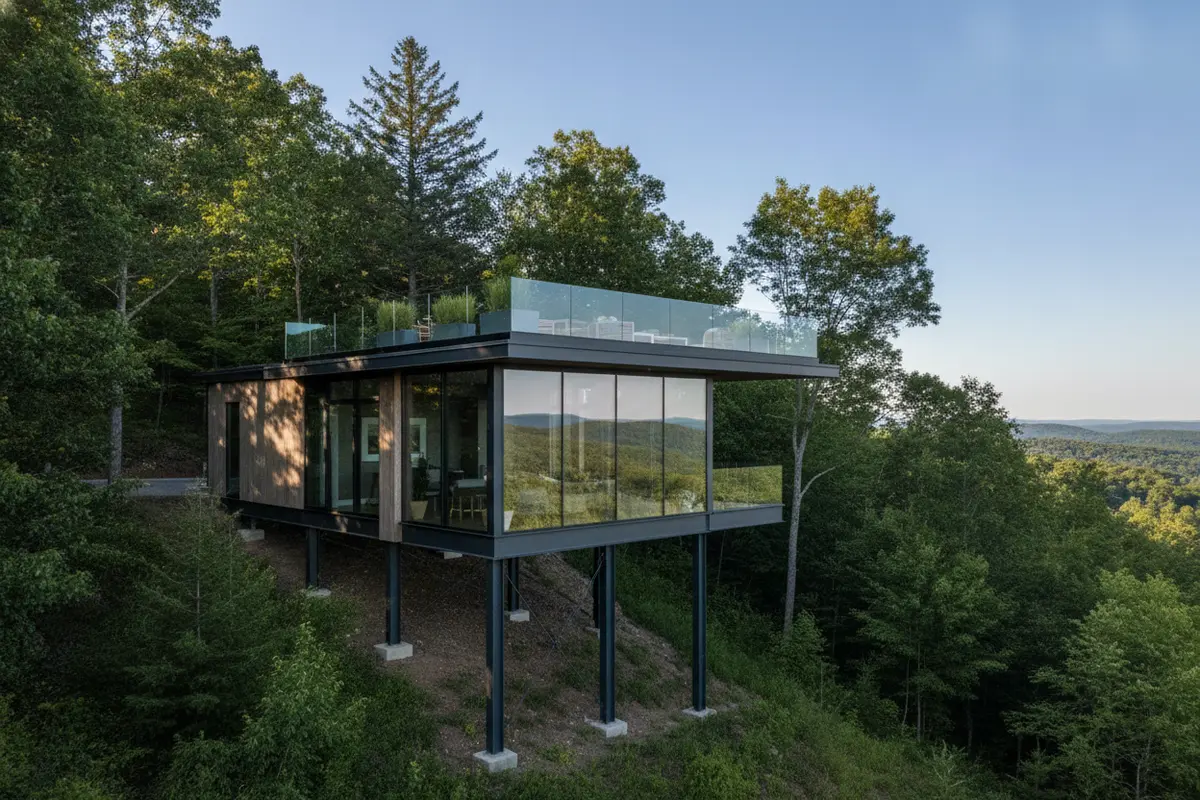
For a Dale Hollow-area purchase, compare proximity to the lake with the privacy, setting, and cost of the property itself. The Preserve is set on 520 wooded acres in Celina, Tennessee, 9 minutes from Dale Hollow Lake. Its modern elevated homes, valley views, floor-to-ceiling windows, and private rooftop decks are intended to bring nature into the stay without suggesting the home is built into trees. Read the Dale Hollow Lake area guide and explore activities at The Preserve to consider how the surroundings might fit your plans.
Visit the area if you can. Drive the routes you would use, note the distance to the activities important to you, and experience the setting at a time of day that resembles a likely visit. A quick online search cannot tell you whether the travel pattern, pace, or feel of a place will work for your household.
How can you tell whether a property fits rental guests?
Think through a guest’s entire stay, not only the listing photo. A practical layout can matter as much as a striking view. Ask whether the sleeping arrangements suit your intended visitors, whether common areas allow people to gather comfortably, and whether the arrival and departure process can be made clear. Consider storage, kitchen use, outdoor space, and the details guests may need to understand before booking.
Match these questions to the actual home rather than a generic rental checklist:
- How many people can the layout accommodate comfortably, and does that match the likely audience?
- Which spaces are private, and which are shared?
- What features are special to the home, such as a rooftop deck, floor-to-ceiling windows, or woodland views?
- Can guests understand how to arrive, use the home, and get help if an issue arises?
- What maintenance, cleaning, and restocking tasks will each stay require?
Then check the same features from your own perspective. If you would not enjoy using the home, rental appeal alone may not make it the right second home. The Preserve offers home models and floor-plan information to help buyers compare the available layouts. Review dimensions and features against your intended use, and ask for clarification about anything that affects your plans.
What financial questions belong in your first-pass analysis?
Separate the cost of acquiring the property from the cost of owning and operating it. Before estimating rental income, identify the expenses you need to investigate and determine which figures are confirmed, variable, or still unknown. Use conservative assumptions and show how your plan looks if bookings or rates are lower than hoped.
Depending on the property and ownership plan, questions may include the purchase price, down payment, loan terms, taxes, insurance, utilities, association charges, furnishing, upkeep, cleaning, guest supplies, and management costs. Confirm which expenses apply to the property under consideration rather than borrowing estimates from another home. Ask the relevant professional or service provider for current, property-specific information.
Build at least two separate budgets: one for ownership without rental income and one for the scenario in which guests contribute revenue. The first helps you see whether you can carry the home if rental activity is limited. The second can help compare assumptions, but it should not be mistaken for a guarantee or a final underwriting decision. Include a reserve for repairs and irregular expenses instead of assuming every month will be predictable.
PenFed’s questions to ask when buying a vacation home identifies location, financing, down payment, and cap rate among considerations. Treat any investment measure as one input, and make sure the figures and assumptions you use apply to the specific home and your individual circumstances.
Which ownership approach best matches your plans?
There is no single best use pattern for every buyer. Compare the trade-offs in the table before settling on a plan. It is a planning aid, not a prediction of rental performance.
| Approach | What to prioritize | Key questions to resolve |
|---|---|---|
| Personal retreat | Dates for your household, setting, comfort, and access to activities | Can the purchase and ongoing expenses fit your budget without rental revenue? |
| Personal use plus rentals | Calendar balance, guest-ready layout, and a workable service plan | Which dates will you reserve, and who will handle guest needs and turnover? |
| Rental-led ownership | Demand research, operating costs, guest fit, and financing assumptions | What evidence supports your revenue assumptions, and how does the plan fare if demand is weaker? |
The same home can be appealing for more than one reason, but those benefits should be evaluated separately. A view or design feature may enhance your personal experience. It does not by itself demonstrate what guests will pay or how often a property will be booked. Similarly, an appealing rental scenario does not replace a personal budget that accounts for ownership costs.
How should you evaluate financing and the purchase process?
Talk with a lender early enough to understand the financing options available for your intended use. Explain whether you plan to occupy the home part of the year, rent it, or combine the two. Ask what documentation is needed, what assumptions the lender uses, and how the intended use may affect eligibility or terms. A buyer should not assume a second home and a rental property are treated identically.
Compare more than a quoted monthly payment. Review the total cash needed to complete the purchase, the loan structure, timing, and costs that continue after closing. If you are buying from outside Tennessee, ask how remote document signing, property visits, and local coordination will work. Professional advice should be based on your own finances and the actual purchase, not a general article.
When you are ready to assess a specific home, organize a document folder with the listing or purchase information, proposed financing, operating assumptions, property questions, and notes from visits. Keep a short record of who confirmed each important figure and when. That makes it easier to spot gaps and compare options without relying on memory.
What should you inspect and ask before committing?
Due diligence is your opportunity to verify details that matter to your intended use. Ask what is included with the purchase, what remains your responsibility, and what rules or agreements apply to the property and community. Clarify the condition, systems, access, utilities, and ongoing obligations with the appropriate parties. Obtain qualified inspections and professional guidance suited to the property and transaction.
If renting is part of your plan, ask specifically how that use is handled. Confirm applicable community requirements and any local obligations directly with the responsible sources; do not rely on assumptions, an old listing, or a verbal estimate. Ask who coordinates cleaning, maintenance, guest communication, and urgent issues. The frequently asked questions and guide to evaluating prefabricated vacation homes can help you prepare questions about the home and its construction, but confirm specifics for the property you are considering.
For a focused conversation with the team, use the contact page. Ask for direct answers on the elements that shape your decision, such as the model, the purchase process, the community’s applicable requirements, and the next step to see a home. Keep your own due-diligence process independent and verify material details before making a commitment.
How do you create a realistic operating plan?
Ownership does not end at closing. Put responsibilities on paper before you rely on a rental plan. Decide who will manage inquiries, reservations, guest instructions, cleaning, supplies, maintenance, and follow-up. If you will not be nearby, consider how local coordination will work and what response time is practical. Ask prospective providers what their service includes, what it costs, and what remains your responsibility.
Build a simple month-by-month calendar that includes likely personal stays, expected rental periods, preparation time, and maintenance. Keep your assumptions visible: planned availability, a range of possible booked nights, and a conservative income estimate. Rather than treating one optimistic projection as certain, test how the budget changes when bookings are lighter or a repair interrupts availability.
The Preserve provides a rental income calculator as a starting point for exploring a scenario. A calculator is not a promise of earnings. Check every input, learn what the tool does and does not include, and compare its output with independently verified costs and your own expectations. Buyers considering an outside manager can also review this owner’s guide to property-management questions.
What does the buying sequence look like?
A clear order of operations can keep the decision manageable:
- Set your purpose. Record how the home will serve you, your household, and possibly guests.
- Establish a budget. Separate confirmed costs from estimates and allow for ownership expenses even when the home is not rented.
- Choose the area. Compare travel, recreation, services, and the kind of setting you want.
- Compare properties and layouts. Assess actual space and features against the people who will use the home.
- Research rental feasibility. Gather evidence and test conservative assumptions; do not treat gross receipts as profit.
- Discuss financing. Explain your intended use to lenders and compare terms for your circumstances.
- Verify the details. Review agreements, property information, inspections, and applicable rental requirements with qualified sources.
- Plan operations. Assign responsibility for guest care, upkeep, cleaning, and financial records before you depend on a rental schedule.
- Make the decision. Proceed only when the home, finances, operating approach, and personal-use expectations fit together.
You can adapt this sequence to your own timeline. For example, a buyer who needs financing guidance may speak with lenders before narrowing the search, while a buyer focused on personal use may first identify the location and layout that feel right. The important point is to surface constraints early, not to rush from browsing directly to a purchase decision.
Explore the home models and plan a visit
Frequently Asked Questions
Can I use a vacation home personally and also rent it?
That may be possible, but your ability to do so depends on the property, its applicable agreements and requirements, and your own calendar. Confirm the rules that apply to a particular home, then decide how many dates you want to reserve for personal use before forecasting rental availability.
How much rental income should I expect?
There is no reliable figure that applies to every home. Demand, season, availability, nightly rate, operating expenses, and management all affect the result. Research the specific market and property, verify costs, and test conservative assumptions rather than treating a projection or calculator result as guaranteed.
What is the first step if I am considering a Dale Hollow home?
Write down your intended use, budget boundaries, and questions about location and layout. Then compare the available home models and contact the team to learn about the next steps. A visit can help you judge the wooded setting and the drive to the lake for yourself.
Should I hire a property manager?
That depends on how much operating work you want to do and what help is available for the home. Compare the scope, cost, communication practices, and limits of prospective services. Even with a manager, owners should understand the decisions and expenses for which they remain responsible.
Ready to explore an elevated home near Dale Hollow Lake?
A well-matched vacation rental home should make sense as a place you want to visit and as a property you can responsibly own. Take time to compare the setting, layout, financing, verified expenses, and operating plan.
Contact The Preserve at Dale Hollow to request information
With a clear plan and careful verification, you can make a more confident decision about whether a modern retreat near Dale Hollow fits the way you want to spend your time and manage ownership.