
Vacation home maintenance is easier to manage when you plan for the whole year instead of reacting to problems during a short visit. At The Preserve at Dale Hollow, modern architect-designed homes sit among 520 wooded acres, about nine minutes from Dale Hollow Lake. The Preserve’s core idea is modern vacation homes for Nashville’s weekend warriors, where design meets nature at an accessible price. It is elevated living: a nature-focused escape with thoughtful design, private wooded settings, and room to enjoy a rooftop deck or views. A sound maintenance plan helps protect the comfort of that kind of retreat, whether you visit often or share use with guests.
Explore home models and plan a visit
A second home has a different rhythm from a primary residence. It may sit empty between stays, face different weather while you are away, and need to be ready for a weekend arrival. The checklist below is a planning tool, not a substitute for the home’s manuals, local requirements, or advice from a qualified professional. Follow the instructions for your specific systems and materials, and confirm who is responsible for each task before you buy or rent.
What makes vacation home maintenance different?
When you live in a home every day, small changes are easier to notice. A slow drip, unusual smell, tripped breaker, or damp spot may be found soon after it appears. At a vacation home, the interval between visits can be longer. A minor issue can go unnoticed until the next trip, so prevention and reliable check-ins matter.
Start with the property itself. The roof, exterior, drainage, heating and cooling equipment, plumbing, electrical systems, appliances, and life-safety devices all have their own maintenance intervals. Some tasks are simple visual checks. Others require a trained professional. Keep a record of the system model numbers, service dates, warranties, manuals, and the names of service providers. Store the information somewhere you can reach when away from the home.
Also clarify the operating arrangement. A home used only by its owner may need a different turnover routine from one that hosts paying guests. Ask what the owner handles, what a community association handles, and what a rental manager may coordinate. Do not assume that a shared setting includes repairs, inspections, or routine care for the inside of an individual home. Review the governing documents, service agreements, and any rental program terms.
How do you build a year-round maintenance plan?
Use a simple calendar with three kinds of tasks: recurring checks, seasonal preparation, and professional service. Give every item an owner, a due date, and a record of completion. If you expect to be away, make arrangements before the task becomes urgent.
- Recurring checks: Test smoke and carbon monoxide alarms according to their manufacturer instructions, look for visible leaks, check doors and windows, and note unusual sounds or odors.
- Seasonal preparation: Adjust the plan to the home’s climate, exposure, and systems. Prepare exterior areas and plumbing for the conditions likely during the coming months.
- Professional service: Follow the maintenance schedules for heating and cooling equipment, fireplaces, generators, septic or well systems if present, and any other installed equipment. Confirm which systems the property actually has.
- After each visit: Write down issues, take dated photos when useful, and leave the home in the condition specified by the owner’s checklist or rental arrangement.
Make the calendar practical. Group related tasks into a visit rather than creating a list that is impossible to complete. Keep seasonal supplies together, but do not store chemicals or equipment in a way that conflicts with product instructions or safety requirements. If a task involves a ladder, electrical work, gas, a roof, or other significant risk, decide in advance whether a qualified professional should handle it.
For a home that may also host guests, build in a turnover check. Confirm that appliances operate as expected, pathways are clear, emergency information is available, and consumables are replenished in line with the rental plan. Keep guest readiness separate from repairs: a tidy space does not prove a system is safe or functioning properly.
What should you check in spring and summer?
As the weather changes, look for signs that winter conditions or a period of vacancy affected the home. Walk the exterior slowly. Check visible roof edges, siding, trim, decks, railings, steps, windows, and doors from a safe location. Note loose, damaged, or deteriorating materials for follow-up rather than attempting repairs beyond your skills.
- Clear leaves and debris from gutters and downspouts where it is safe to do so. Check that downspouts remain connected and direct water away as intended.
- Look for standing water, erosion, or soil that slopes toward the foundation. Check that drainage paths are not blocked by leaves or landscaping.
- Inspect visible exterior sealant and weatherstripping. Make a note of gaps or damaged areas that may need repair.
- Check decks, stairs, and handrails for visible movement, splintering, or other damage before using them.
- Test exterior lights and confirm that walking routes are clear after dark.
- Review screens, door latches, and window operation. Open and close each accessible window as appropriate for the home and its safety instructions.
- Replace or clean HVAC filters on the schedule recommended for that equipment, and arrange service if the system needs professional attention.
These are practical prompts, not a promise that every home has the same needs. A county home-maintenance checklist recommends checking gutters and downspouts and looking for damage such as rust, holes, blockages, or disconnected parts; use that as a reminder to inspect the drainage system you have. See Ashtabula County’s seasonal home maintenance checklist. A separate Henrico County seasonal maintenance appendix also lists gutter and downspout inspection. Adapt public checklists to your own home and consult the manufacturer or a professional for system-specific work.
Warm-weather visits are also a good time to look at outdoor areas and prepare for the months ahead. Remove damaged or dead vegetation when appropriate, keep access to utility shutoffs and equipment clear, and review any local restrictions before changing landscaping. If you plan to boat, fish, or explore nearby attractions, use the visit to check the home before heading out. The Preserve’s activities and experience guide can help you consider how a home base fits into time spent around the property and lake.
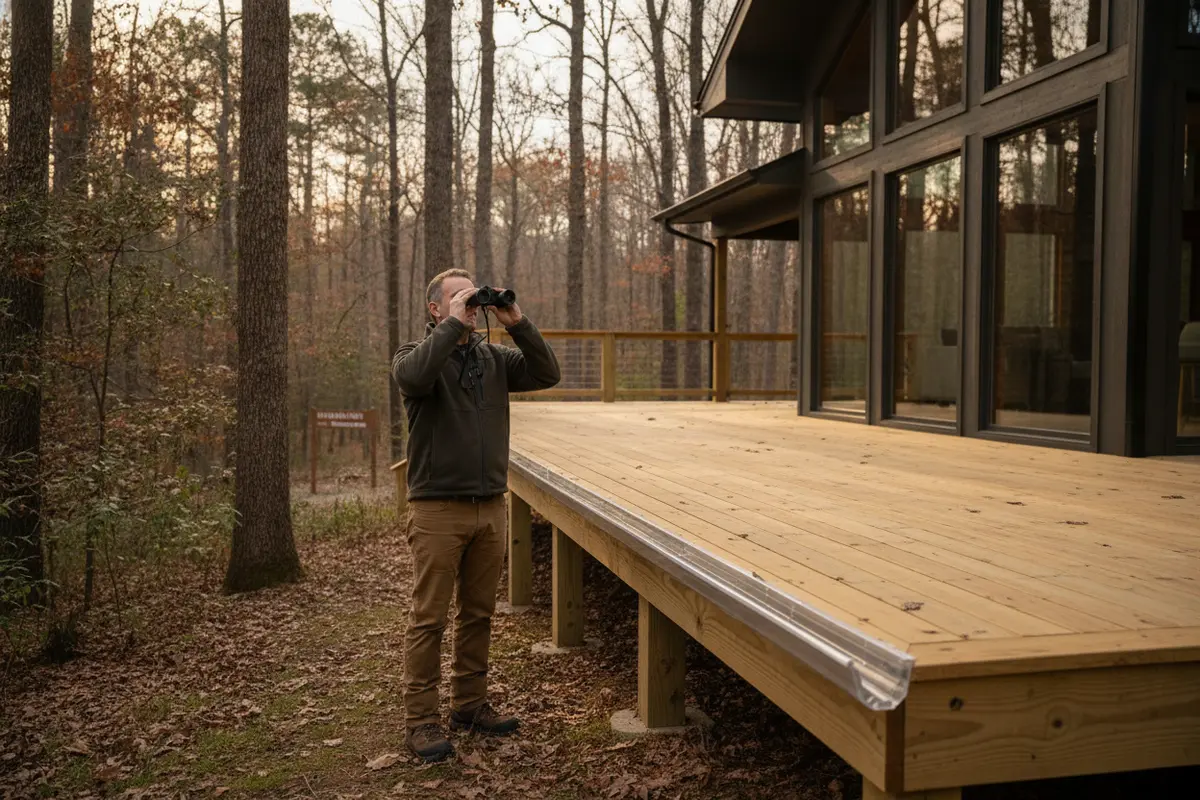
How should you prepare for fall and winter?
Before colder or wetter weather arrives, focus on water management, openings, and the systems that keep the home comfortable. The right steps depend on local conditions and the equipment installed. Read the appliance and plumbing manuals, and ask a qualified local professional how to prepare systems that may be vulnerable while the home is vacant.
- Inspect roof drainage again and remove accumulated leaves or other debris from gutters and downspouts when safe.
- Check doors and windows for obvious drafts or damage. Repair problems using materials and methods appropriate to the window, door, and exterior finish.
- Confirm that exterior faucets, exposed pipes, and any irrigation equipment are protected or shut down as directed for the property.
- Set heating controls and follow professional guidance for maintaining safe conditions when the house is unoccupied. Do not assume that turning a system completely off is appropriate.
- Check smoke and carbon monoxide alarms and review fire extinguisher placement and service instructions.
- Trim or address branches that could threaten the home, but use a qualified tree-care professional for work beyond safe ground-level tasks.
- Make sure contact details for a nearby emergency contact and service providers are current.
Before leaving after a winter visit, use a written departure checklist. Confirm doors and windows are secured, appliances are left in the intended state, and any water shutoff or freeze-protection steps match professional instructions. If you plan to shut off water, ask how to protect plumbing and any equipment that depends on water. A single generic rule may not fit every property.
For an extended absence, arrange periodic visits by a trusted person or a qualified property-care provider. Agree on what that person should inspect, how quickly they should contact you about a concern, and how they can reach you. Share shutoff locations and emergency instructions in a secure, practical way. If your home is part of a rental arrangement, coordinate the plan with the responsible manager and avoid conflicting instructions.
Which maintenance tasks can you handle, and when should you call a professional?
A useful plan separates observation from repair. Owners can often make safe visual checks and keep records. Work on roofs, wiring, gas appliances, structural components, or complex mechanical systems may call for professional training, tools, and permits. Follow the manufacturer’s guidance, local requirements, and the advice of appropriately qualified professionals.
| Task type | Examples | Planning approach |
|---|---|---|
| Routine visual checks | Look for visible leaks, blocked drainage, damaged screens, or unusual wear. | Schedule during visits; record and photograph concerns for follow-up. |
| Basic owner upkeep | Replace a filter or clean an accessible area when the equipment instructions allow it. | Use the correct product or part and follow the manual; do not improvise. |
| Specialized service | HVAC servicing, electrical or gas work, roof repairs, or complex plumbing issues. | Use a qualified professional and retain service records and recommendations. |
| Absence and guest coordination | Periodic checks, urgent issue response, and guest turnover. | Assign a named contact and confirm responsibilities in writing. |
The point of the table is to make ownership decisions visible before a problem occurs. Ask whether there is reliable access to local help, how service appointments will work when you are not nearby, and whether your budget and schedule can accommodate the tasks you cannot or should not do yourself.
What should prospective owners ask before choosing a vacation home?
Maintenance begins during due diligence. Before you commit, learn what the home includes and how it is built, what systems require routine care, and what condition each component is in. Review inspections and written records with the appropriate professionals. Request clear answers instead of relying on broad assurances.
- What is included? Request a list of installed appliances and systems, their manuals, warranty information, and any known service history.
- What needs attention soon? Ask about the age and condition of major components, prior water intrusion, repairs, and any follow-up recommended by an inspector.
- Who handles shared areas? Read association documents to understand the boundaries between individual-owner duties and shared-area responsibilities.
- How will you get help while away? Identify service options, emergency contacts, access procedures, and the way urgent costs or decisions are approved.
- Could guests use the home? Review the rental rules and management terms, then understand who handles cleaning, guest reports, routine checks, and repairs.
- Does the layout suit your visits? Compare the floor plan and storage to the way you expect to use the property and maintain it.
For a closer look at layouts and available models, review The Preserve’s home models and floor plans. The frequently asked questions page is another starting point for practical ownership questions. You can also read the community’s guide to evaluating prefabricated vacation homes, then make a list of questions specific to the property and documents you are reviewing.
A maintenance plan can also help you compare locations. Consider the drive to the home, the time you can spend there, the availability of help nearby, and the tradeoff between a wooded setting and daily convenience. For local context, see the Celina guide and Dale Hollow area guide. No checklist can replace an inspection or establish the future condition of a property, but it can help you ask better questions.
How can you plan for rental use without losing track of upkeep?
If you may share the home with short-term guests, treat maintenance and hosting as connected but distinct plans. More use can mean more frequent checks of furnishings, fixtures, appliances, and high-touch areas. It also means someone needs to communicate clearly when a guest reports a problem. Put the process in writing: who receives a report, who decides whether the home remains available, who arranges a repair, and how the owner receives an update.
Do not build a financial plan around an assumed level of rental income. Occupancy, operating costs, maintenance needs, and management arrangements can vary. Estimate expenses using current, property-specific information and review assumptions with the right financial and tax professionals. The rental income calculator can be one input for exploring a scenario, not a guarantee of results.
Think through the guest experience as well as the work. Provide clear operating instructions for equipment that guests may use, set reasonable expectations for outdoor areas, and make emergency contacts easy to find. Schedule a post-stay inspection that checks for damage and maintenance concerns rather than relying on housekeeping alone. If a system needs service, block dates as necessary until it is safe and ready for use.
Ask a question or schedule a conversation
Frequently Asked Questions
How often should I check on a vacation home?
Choose a schedule based on the home’s systems, local conditions, how long it will be empty, and any insurer or equipment requirements. Ask a local professional what is appropriate for the specific property, and arrange additional checks during severe weather or when a concern is reported.
Should I turn off the water when I leave?
There is no universal answer. Ask a qualified plumber or property professional how your plumbing and installed equipment should be handled during an absence. Follow their written instructions, including any steps needed to protect fixtures or appliances.
What maintenance records should an owner keep?
Keep inspection reports, invoices, warranties, manuals, service dates, photographs of issues, and notes about repairs or recommendations. A shared digital file can help an owner, co-owner, or authorized property manager find current information.
Can a property manager take care of every maintenance task?
Responsibilities differ by agreement. Read the management contract carefully and ask which routine checks, guest reports, vendor coordination, and approvals are included. Confirm who pays for work and how urgent repairs are handled.
Ready to plan a well-cared-for escape near Dale Hollow Lake?
At The Preserve at Dale Hollow, modern elevated homes, wooded surroundings, and proximity to Dale Hollow Lake create a distinctive setting for personal use and possible rental hosting. Explore the two-bedroom home and three-bedroom home details as you consider the layout that fits your plans.
Contact The Preserve to ask about homes and arrange a tour
A clear maintenance plan starts with the home’s actual systems, a realistic schedule, and agreement about who will respond when you are away.